Humans are relational beings at our core. Upon hearing the word “relational”, where did your mind go first? Did you consider romantic relationships? Or perhaps familial? Or maybe the relationship with your best friend or coworkers came to mind?
Our person to person relationships are extremely important. It’s no secret that human happiness is directly correlated with the quality of our interpersonal relationships. It’s also no secret that with the rise of technology taking over our communication and people spending less in-person time together, the quality of our relationships has suffered. This has been one of the bigger contributing factors to the sense of meaninglessness and unhappiness that more and more people today are reporting.
Interpersonal relationships, however, are not the only kind that matter. We are also designed to be in relationship with God, with the Earth we inhabit, and with our history. The touchpoints with these three things, which are all primary sources of meaning and happiness, are arguably more lost than even our human-to-human contact. No wonder we feel lost as well.
We’ll begin with the latter.
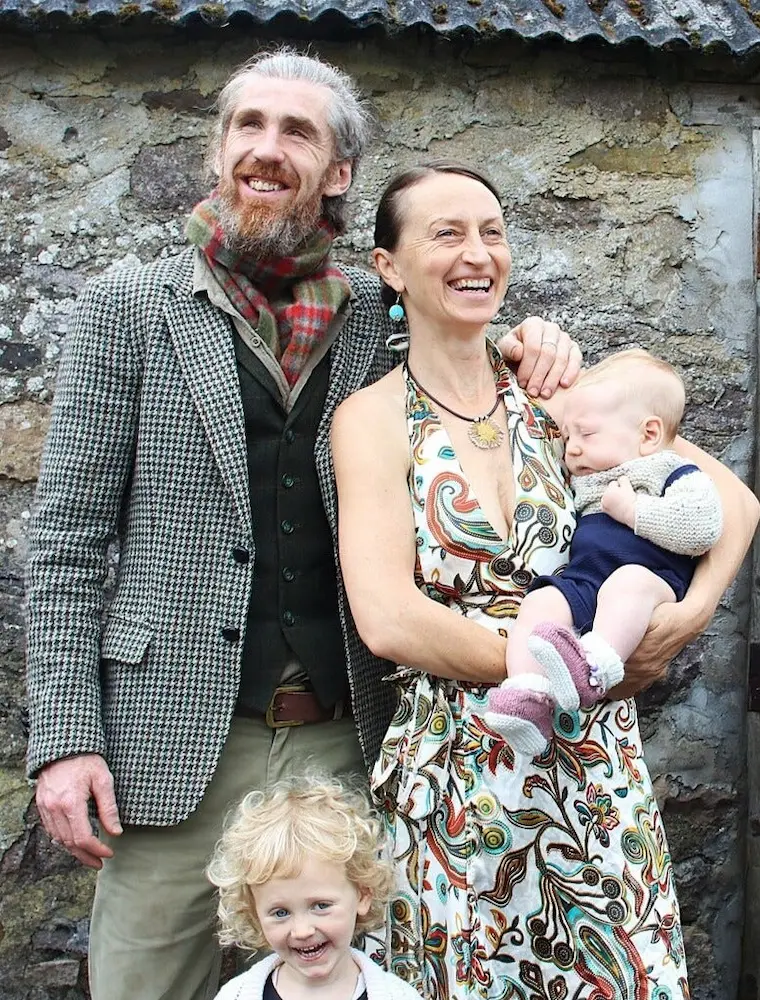
Part of the function of a family, a clan, or tribe for all of human history is to pass down our collective story; this is true both from the micro level of our individual ancestors, and the stories that shaped us more broadly on the macro. These stories would help mold your sense of self, but more importantly, it would mold your sense of belonging. When you are part of a story, one you know, one you can participate in, there is a built-in sense of meaning. You are a part of something bigger, you are inspired by the challenges and triumphs of someone you can relate to, you are aware that the values you hold came before you and are there for you to carry forth in your own life and to pass on beyond yourself. You are connected in truth to the song that your blood is singing… and importantly, it is singing whether or not you are aware of how it goes. Maybe you’ve forgotten your song. Or maybe, no one ever taught it to you?
The Earth sings songs too. The Earth holds memory.
A surefire way to remember what you’ve forgotten is to go back to where you remembered, or perhaps where it lives.
There is a reason so many people describe visiting the lands of their ancestors as unexpectedly emotional. They arrive expecting a vacation and leave feeling as though they have touched something much deeper. Standing where your people stood, walking roads they walked, hearing accents that somehow sound familiar, seeing landscapes that shaped generations before you, can awaken a sense of belonging that is difficult to explain but impossible to deny.
This is because relationship requires proximity. The stories that formed your family did not happen in the abstract; they happened somewhere. They happened on particular hillsides, in particular villages, along particular rivers and coastlines. The land itself became a witness to the joys, struggles, sacrifices, and prayers that eventually led to you. Returning to those places can remind you that your life did not begin with you. You are part of a much longer story. You are the recipient of an inheritance, whether you know its details or not.
In a culture that often encourages us to invent ourselves from scratch, there is something profoundly stabilizing about remembering that we come from somewhere. That we belong somewhere. That we are connected to people, places, and stories that existed long before us and will continue long after we are gone.
Beyond retracing the physical locations of your ancestry in the Earth, it’s also evident that anywhere where creation herself feels apparent (for example: the woods, a garden, the ocean), has the ability to stir something within you. You likely have many homes in your life. Each one is one you had a relationship with. You cared for it, maybe in varying degrees, and it gave you something in return. Well, you have one home that you live in your entire life.
The Earth is not merely the backdrop against which human life unfolds. It is the very environment that sustains us. Every meal we eat, every breath we take, every material used to build our homes, every stream that provides water, every tree that provides shelter and oxygen, it all of it comes from the Earth. We do not stand apart from creation; we participate in it.
For most of human history, this reality was obvious. People understood that flourishing depended upon living in right relationship with the land. If the soil was cared for, it produced abundance. If waterways were protected, life thrived. If creation was treated merely as something to exploit, both people and place eventually suffered. The same remains true today.
When we approach the Earth with gratitude, stewardship, and reverence, both humanity and creation benefit. We begin to remember that we are not masters standing over creation, but stewards living within it. In many ways, the modern sense of disconnection is not simply a loss of relationship with one another; it is also a loss of relationship with the place that has faithfully sustained us from the beginning.
Finally, our relationship with God. The entirety of the Christian story is, in a word: relationship.
Across cultures, time periods, and religious traditions, human beings have consistently searched for something beyond themselves. We ask questions that science alone cannot answer: Why am I here? What gives life meaning? Is there a purpose to suffering? Is there anything beyond death? The fact that these questions arise so naturally within us suggests that we are oriented toward something greater than ourselves.
Interestingly, research continues to show that people who maintain a sincere religious faith and experience a personal relationship with the divine report higher levels of meaning, purpose, hope, and overall life satisfaction. Arthur Brooks, among others, has written extensively on the connection between faith, happiness, and human flourishing. While statistics can never fully capture the mystery of spiritual life, they do point toward something humanity has long known intuitively: we seem to be made for transcendence. We seem to be made for God.
The biblical story begins with this reality.
Before there were nations, churches, families, or traditions, there was a garden.
The Garden of Eden was not simply a location. It was a picture of perfect relationship. Heaven and Earth existed together without division. Adam knew where he came from. He knew who had made him. He knew who he belonged to. There was no confusion about his identity because there was no confusion about his relationship.
God walked with Adam. They spoke. They communed. Day after day, Adam lived from trust. He returned again and again to what God had provided. The fruit of the garden was sufficient. The Tree of Life stood at the center as a continual invitation to receive life from God rather than manufacture it apart from Him. Everything Adam needed was given freely through relationship.
Notice what happens when the enemy arrives. His first attack is not against Adam’s possessions. It is not against the land. It is not even against Adam himself. His first attack is against relationship. “Did God really say…?”
With a single question, doubt enters the conversation. Trust begins to fracture. The relationship that had defined everything else becomes the very thing placed under suspicion. This pattern has repeated throughout human history ever since. We become disconnected from God, and in doing so we often become disconnected from ourselves. We lose touch with where we came from. We lose touch with one another. We lose touch with creation. The relationships that once anchored us begin to fragment.
Yet the entire story of Scripture is God’s relentless effort to restore what was lost.
To restore relationship.
To restore communion.
To restore belonging.
Perhaps this is why places of pilgrimage continue to matter.
A pilgrimage is not tourism. It is not simply about seeing beautiful places or learning interesting facts.
A pilgrimage is an act of remembering. It is a deliberate return to relationship.
It is a way of stepping out of ordinary life long enough to hear the deeper song beneath it.
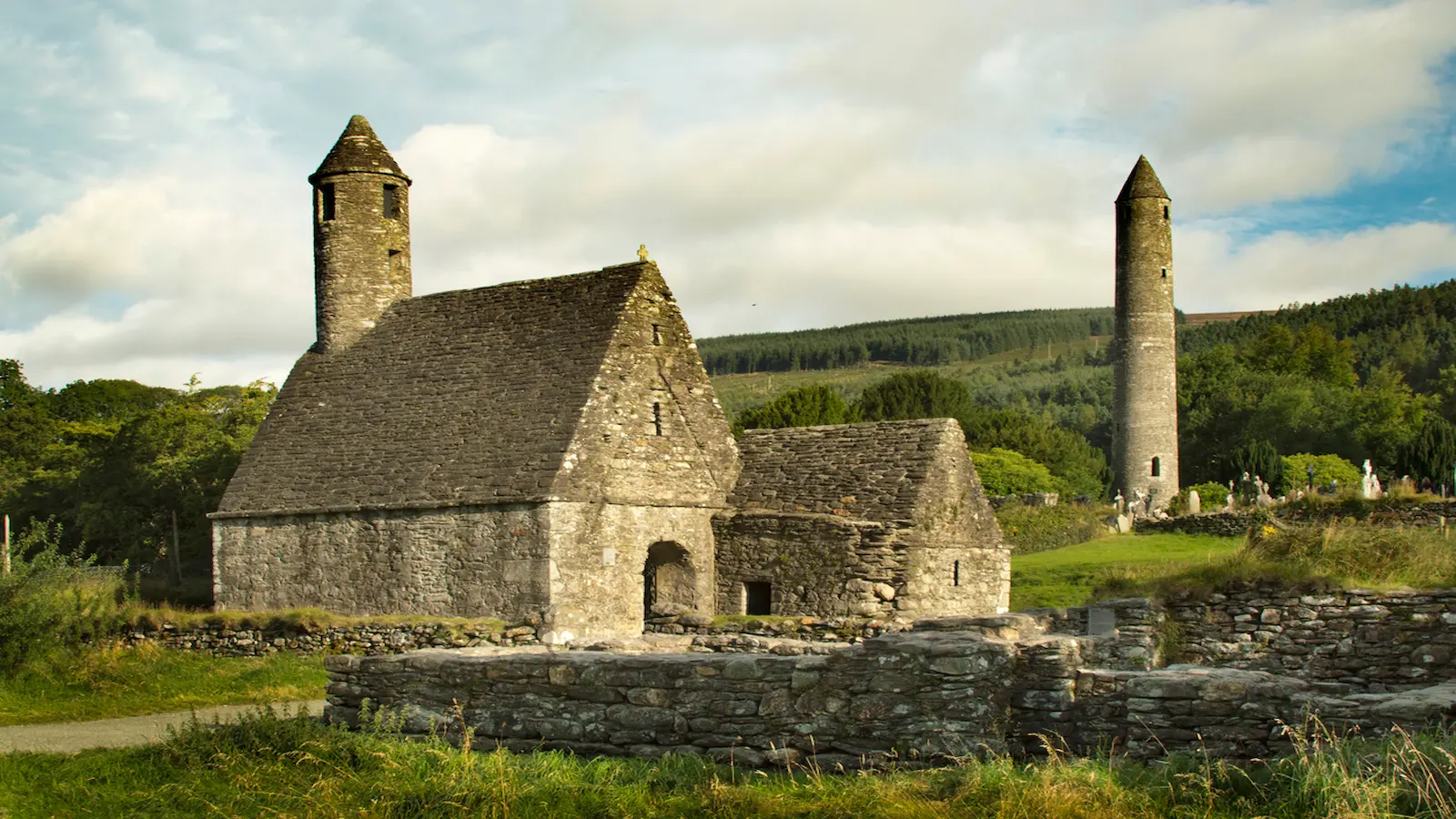
This September, we invite you to join us on Celtic Christian Roots, a sacred pilgrimage through the east of Ireland designed to reconnect you with the land, the saints, and the deep spiritual heritage woven into Celtic Christianity.
Whether Ireland is the homeland of your ancestors or simply a place that has long stirred something within your soul, this journey offers an opportunity to remember. Together we will walk the ancient valleys of Glendalough, stand before the mysteries of Newgrange, encounter the treasures of the Book of Kells, visit Kildare and the legacy of St. Brigid, gather for prayer and reflection, share traditional music, attend Mass, and explore the wisdom of Ireland’s early Christian tradition.
More than anything, this pilgrimage is an invitation to relationship.
Relationship with the God who calls you.
Relationship with the land that carries memory.
Relationship with the saints and stories that have shaped generations of believers.
Relationship with the deeper inheritance that may have been waiting patiently for you to remember it.
Perhaps the reason Ireland continues to call so many people is not because it offers something new, but because it helps us remember something ancient; maybe even, your song.
To read more of Paige’s work: https://paigeoxley.substack.com/