
This Weeks Organic Stories
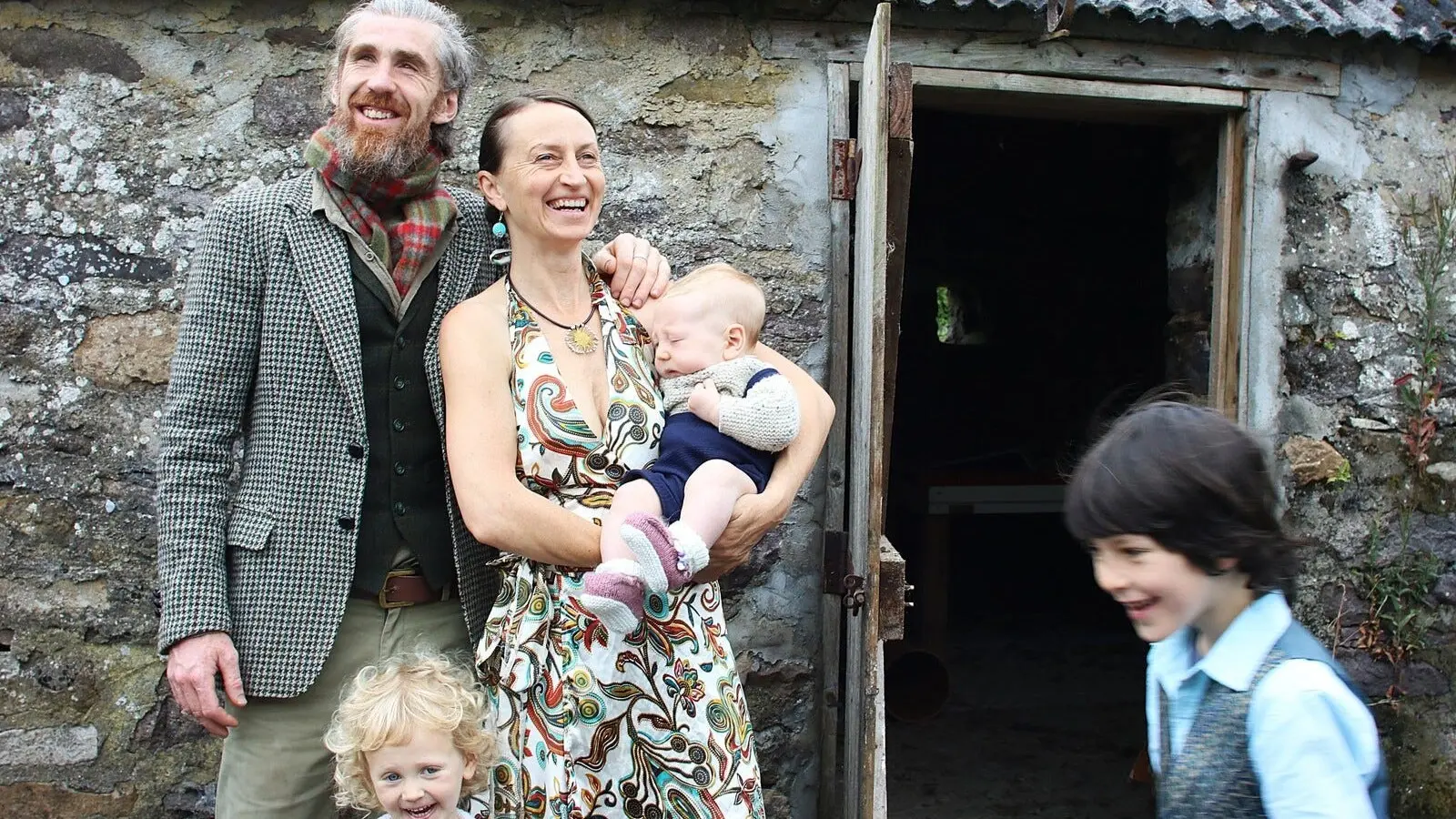
Mystics and Misfits: Walking the Old Way: In conversation with Siobhán de Paor
Jun 25, 2026Mel sat down with Siobhán de Paor ahead of our retreat this July to ask her a few questions about life, mission and the Irish revival happening across the country.
Yourself and Diarmuid are the founders of Wild Irish. Can you tell us a bit about the impetuous for that creative project?
So Wild Irish, the impetus for its beginning was simple enough. Diarmuid and I had gone to West Kerry to heal ourselves individually. We were both in that healing process of our lives and Kerry offered us certain medicines.
For me, it was very much in wildflowers, I got to know them. I was able to connect, for the first time, with this consciousness, the sentience of nature in and through the wildflowers and through knowing their uses. I became very passionate about that. I also discovered the Irish language. This changed me on a subtle level. I found that it empowered a certain aspect of myself, a nativeness in me that had previously been dormant, and this was a medicine. I felt that this medicine was there for me and it could be there for everybody.
For Diarmuid seaweed foraging was a big thing, connecting with the sea and the bounty of it. This was actually something we really shared in the beginning, our passion for seaweed and seaweed foraging. To discover this incredible food source, to go snorkelling for it, diving with it and harvesting it at low tide. We’d go out to these especially beautiful coastal caves and there was so much healing in that for us both.
It was an empowerment that brought us closer to our own country. When you come back into your own, you come into familiarity with your own places and you’re down there climbing on slippery rocks and out recognizing all the wildflowers and making your own tinctures, your own native self comes back up to the surface.
During that time I found creative expression through Irish poetry. Using our language in a poetic way really broke through a lot of blocks that I had with it. It was like learning to run before walking.
For Diarmuid with the hurling he was out doing in the wilds of Kerry and on the beach, with the waves. It was like he was bringing the game back into the setting that it always belonged in.
So, we discovered these things for ourselves and then we wanted to share them with others. We thought, why not? Let’s just bring other people and do the things that we know, the things that have healed us. Sweat lodge was part of the original template, too.
So, Wild Irish was essentially us sharing the medicine that we had found ourselves. And it’s continued as that. Obviously the medicine has changed. We have left West Kerry and moved to Kilkenny. I’ve now found more healing in the renaissance of the rosary and devotion and prayer practice. Diarmuid’s work has moved on to working deeply with men in nature camps, being outdoors with the fire. The fire has become a big part of his practice and sweat lodge as well. And so now he’s sharing those things too.
So, in summation, Wild Irish, the impetus for Wild Irish was us sharing the medicine that we had found with others.
What was it like to have a film crew following your life for a year?
It wasn’t that bad because they only came at certain times and they were very much in the periphery. The only difficulty was when other people were there. We didn’t mind at all when we were on our own. The children were good and familiar with the crew.
I mean, we’re not unfamiliar with cameras either, myself and Diarmuid, and we’d often use them ourselves. We both like to take photographs and use video. When I first met Diarmuid, I did a photography project. He was one of my nude muses.
The two lads, Michael and Mieke, are not very in your face. They don’t direct or anything like that. They shot in an experimental style and it was extremely non-intrusive. Actually, being a recorder too, I thought it was a little bit too non-intrusive at times. I was like, “God, you’re not getting, come up here in and get it, stick the mic in and capture the story.”
I’ve had experience with different types of film crews including RTE and it was so different. They were very much in the background. The only time it was awkward was when other people were there. When it was just us it was easy but if we were going to meet somebody and they were following us, it meant we were bringing the third eye in. The camera makes everybody self-conscious. You change the whole energy by bringing a camera and we had to take responsibility for that.
After a while people do forget the camera is there, kind of, but I mean, it is awkward. I find Irish people are particularly self-conscious. So, when we went and met other people, it was a little bit harder. But otherwise, I’d say you probably couldn’t pick a pair who’d find it easier than Diarmuid and I to have a film crew follow us.
What does it mean to be a family rooted in Irish Culture in modern Ireland?
It means we are aware of the national context of our actions; we know our mission in this country; we know our position in this country. We occupy a societal fringe but in a deranged society, the fringe is where you need to be. We have a bridging function as does everyone who is transitioning from unconscious to conscious living.
Our message is relatable to those whose experience resonates with our own; Diarmuid can speak to the GAA community and the elements within that community that are beginning to transition. Similarly, I can speak to mothers, creatives and to the Catholic community.
It means that the things we are passionate about are of this land, are native to Eirú. Some people’s work is concerned with weaving cultural traditions from different lands, ours is very much concerned with reviving and reclaiming the traditions that are native to this land.
Because these ancestral traditions were created and learned in the Irish language, knowledge of them exists in the Irish -language consciousness and there is an automatic or natural remembrance of them in our biology/genealogy when we speak Irish.
How does the Irish language influence your approach to working with the land?
The land speaks Irish, so there is a possibility for a clearer communication. We are talking about language, but the conversation is not external or audible to me. It happens through the body. So, for example if I say oak while looking at the oak tree and then I feel what response my body is feeling, there is a much more noticeable response in the biology if I say dair or darach.
In Ireland we were so intimate with the land as evidenced by the fact that ours is the most densely named landscape, in Europe at least. The Irish language has an intimacy in its phraseology, the séimhiú, h, softening our actions, the s’s all hushing sssshhs.
Táim ag chuir síolta captures the intimacy of this relational act more than I am sowing seeds. I can feel it in my body. The body is the communication tool. Of course, it has to be somewhat clear to function as that.
What impact have the writings of John Moriarty had on your life?
The work of John Moriarty has given me permission to express my design as a writer, storyteller and a student of mysticism, to allow the uninterrupted flow of consciousness onto the page, the screen and into the room, to ‘do a John on it’ in this flow. let my passion and humanity be exalted rather than neutralized, as I was learning in the Eastern practices at the time. Also he articulates the Jesus story in the way that I was experiencing it, as an epic metaphor and an emotional roller coaster into and out of human suffering.
Also initially, I couldn’t believed that such a rambling poetic piece of pros could be published as is and be so received. It is a testimony to our concentration which is possibly under-rated these days.
What do you think is the purpose and power of prayer?
Well in this cosmic soup of infinite possibilities our intent is of the utmost importance, intent determines which of the zillions of elements of this energy soup, particulate and become form in front of you.
Prayer is focused intent. So really it is art of manifestation. To clarify intent and send a clear message to our (highly responsive) Creator, it is recommended that you repeat it over and over. Hence repetitive prayer.
Ancestral prayer, has been repeated for centuries so it’s like walking a well-trodden path rather than carving a new one. It’s just a more efficient means of manifesting.
And then we often ask for things we want but don’t really need, so we are praying for the ‘wrong thing’ as it were. ‘Soulish prayers’ my mother used to call them. The new car, job, man comes, it fails, we learn, we grow, but times a wastin too so to avoid this, we can simplify our prayers and pray for growth, for truth, for health.
The rosary is essentially a prayer for holy union, of father and mother, masculine and feminine; union which can become a fertile field for the third person of the holy trinity; the divine child. It is so foundational a theme to the entire human story that it pervades all themes and can hold the resolution of countless specific prayers within it.
To pray for another person is particularly powerful because the danger of personal desires distorting the intent is much less. To pray for a person, you don’t know even brings us automatically/naturally into the truth of our oneness with humanity, and then we are praying from the Truth of Ourselves which is a more powerful prayer. There is so much in it really and we’ll explore more of these themes on our retreat at An Tairseach.
What is your intention for the people who come on the Mystics and Misfits retreat at An Tairseach this July?
My intention for those who come on the retreat is that they would gain a new perspective on our ancestral Christian mantras and practices as they belong to an ancient native nature tradition.
That they might weave some of the disparate threads of their diverse spiritual practice into a more tangible and familiar lineage. That we will experience the power of collective prayer. And the elevation, even for a moment the great joy of being in a resonant community which albeit temporary has the power to permanently dissolve our feelings of separation and even isolation.
Join us at An Tairseach from 17th – 19th of July 2026.
Latest Organic Stories
 June 25, 2026
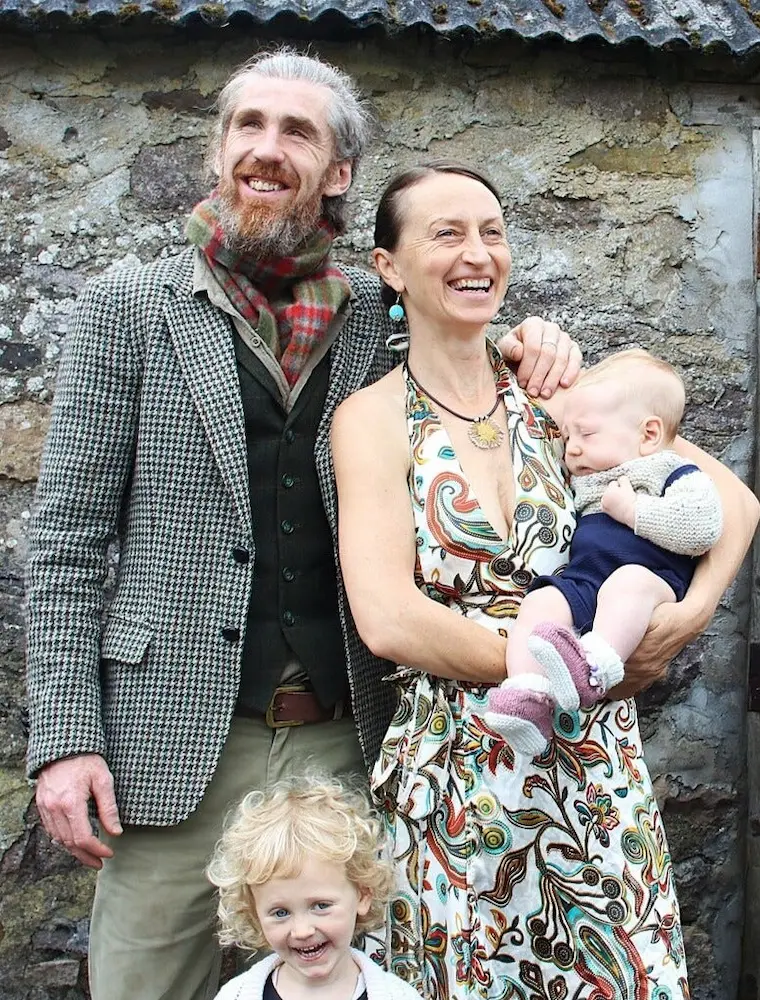
Mystics and Misfits: Walking the Old Way: In conversation with Siobhán de Paor
My intention for those who come on the retreat is that they would gain a new perspective on our ancestral Christian mantras and practices as they belong to an ancient native nature tradition.
 June 16, 2026
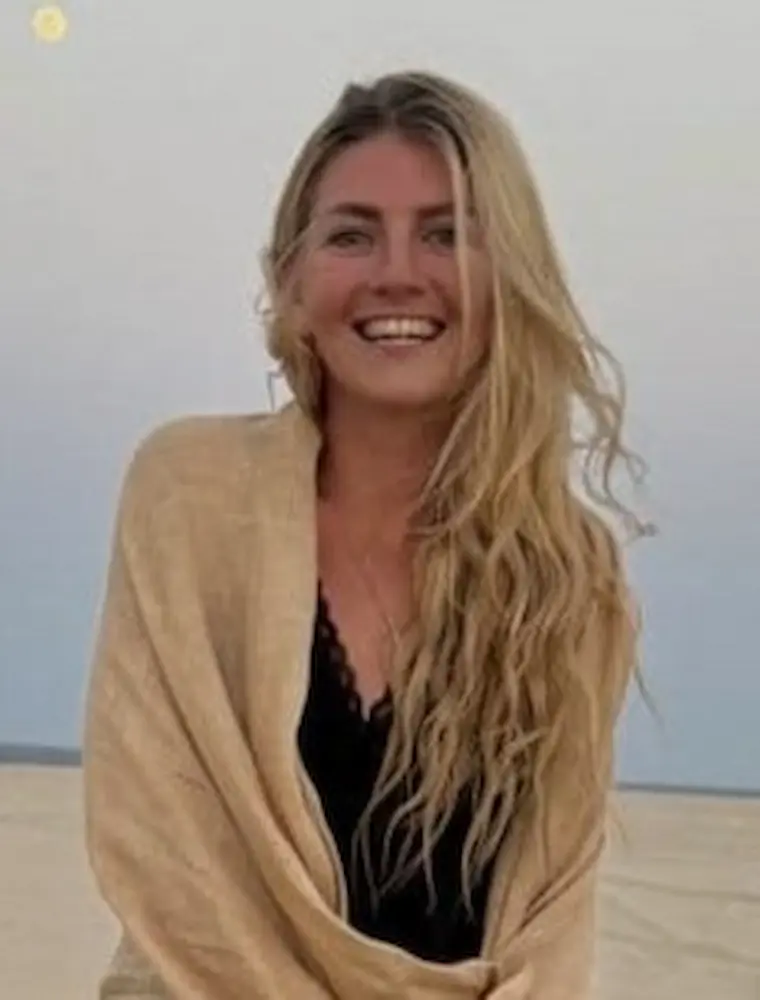
Celtic Christian Roots on Irish Soil: In conversation with Paige Oxley
A pilgrimage is not tourism. It is not simply about seeing beautiful places or learning interesting facts. A pilgrimage is an act of remembering. It is a deliberate return to relationship. It is a way of stepping out of ordinary life long enough to hear the deeper song beneath it.
 May 13, 2026
October Sabbatical
We’re excited to launch our first month-long residency this October, set within our 70-acre organic farm between the Irish Sea, the Vartry River and the Wicklow Mountains.
